The Pleiades
Siblings, Seasons, the Sacred, and Samhain

[Author’s Note: October was WILD, so in service to my sleep, I am going to forgo the audio recording this month.]
Occasionally, a stargazing student will point up and say, “Is that the Little Dipper?” Sometimes it is - but more often than not, it’s the Pleiades, or as I personally like to call this charismatic star cluster, “The Littlest Dipper”. November may as well be the month of the Pleiades, because they’re visible just about all night long, all month.
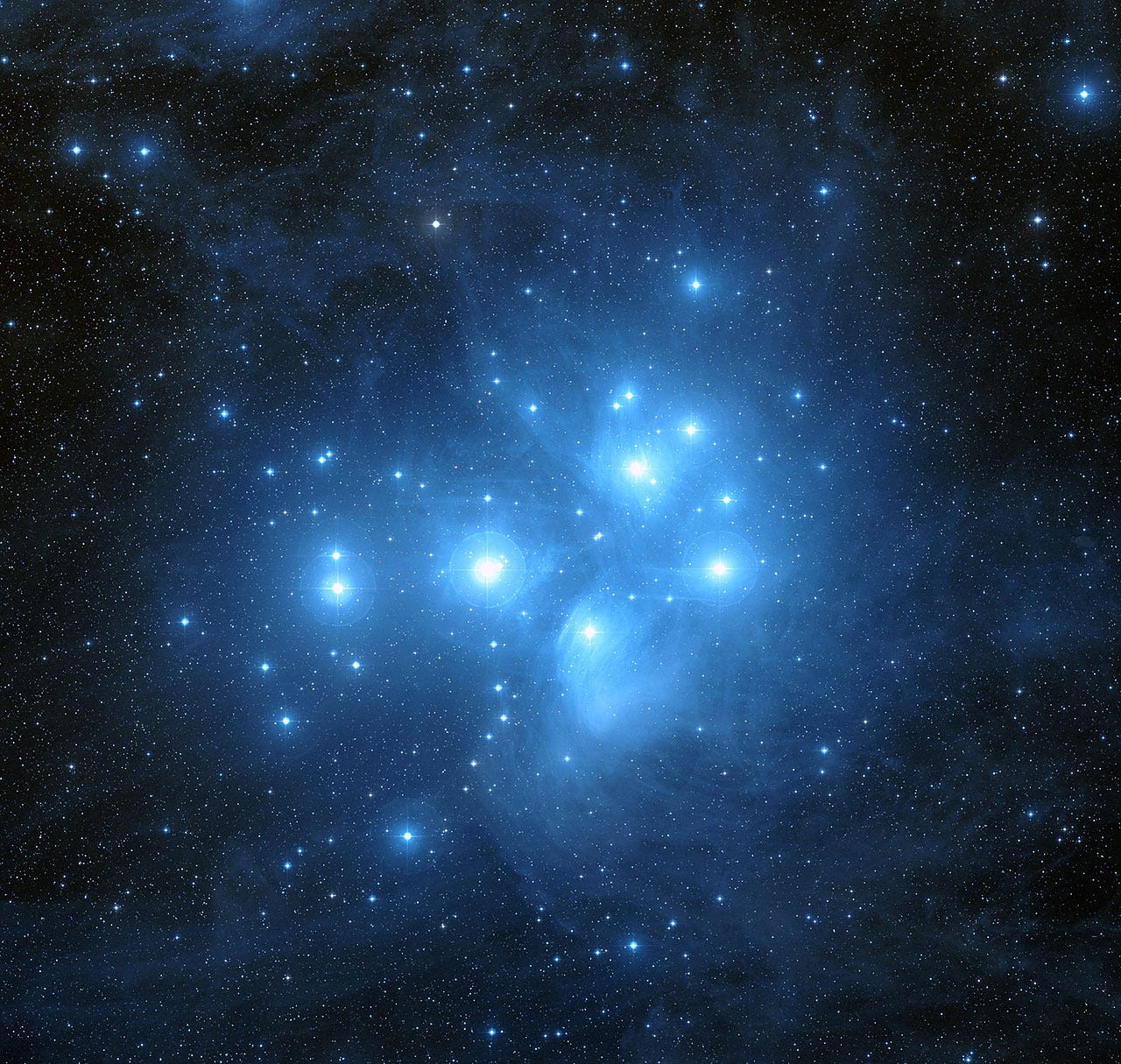
The appearance of this tight grouping of stars depends on atmospheric conditions, sometimes appearing as just 5 or 6 stars and other times as 7, 8, 9, or more. In reality, this cluster may contain more than a thousand individual young stars, and their light is further refracted by nearby cosmic dust, producing an intense luminosity that makes the cluster appear as a bright, recognizable smudge.
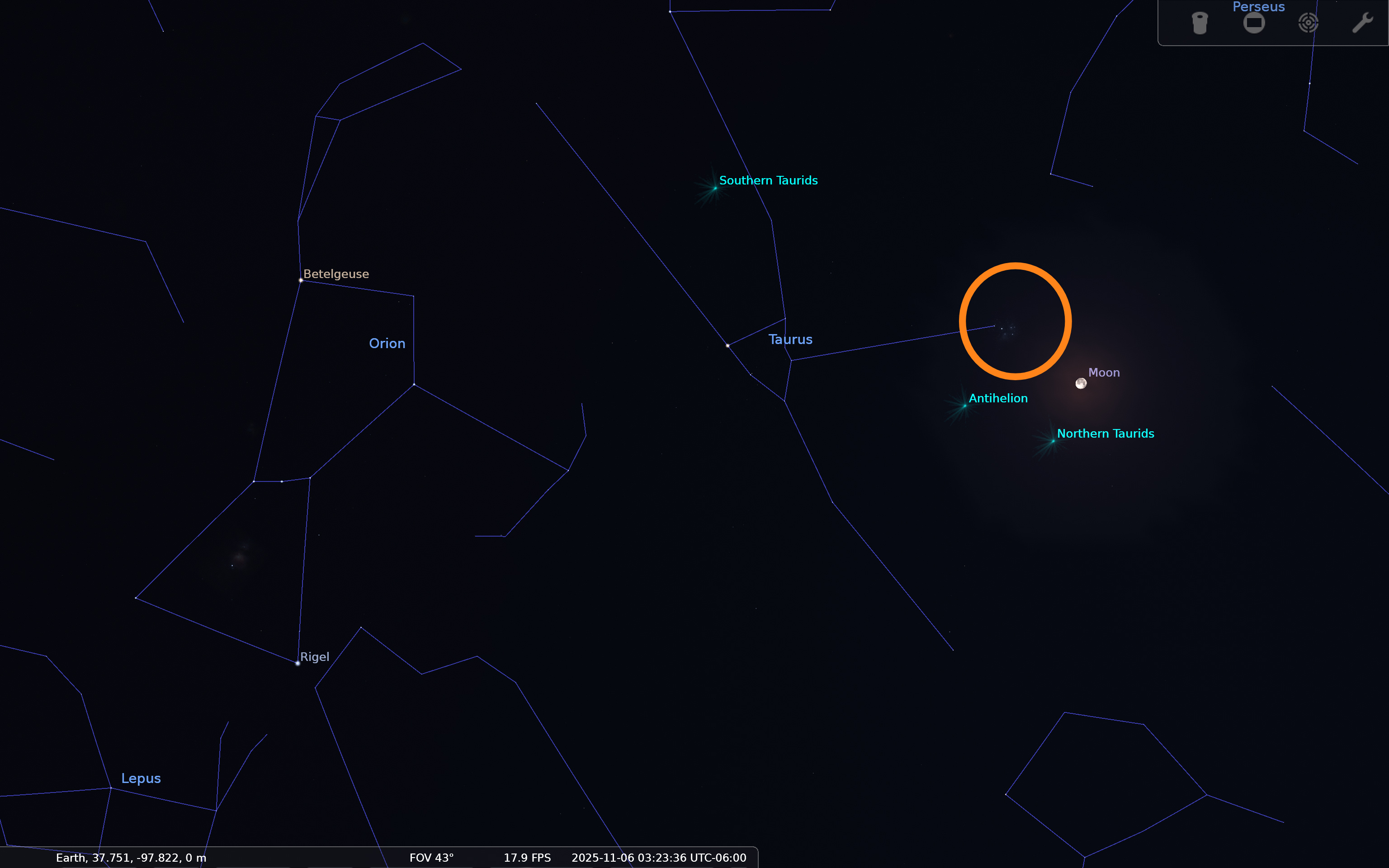
This brightness is part of what makes the Pleiades the most (and potentially only) recognizable naked-eye star cluster in cultures across the globe, but their sky placement also plays a significant role in this recognition. The Pleiades are in the constellation Taurus the Bull, near the celestial equator, making them visible from nearly every populated place on Earth. While their significance is a bit different in every culture, there are a few recurring themes:
Cosmic Siblings
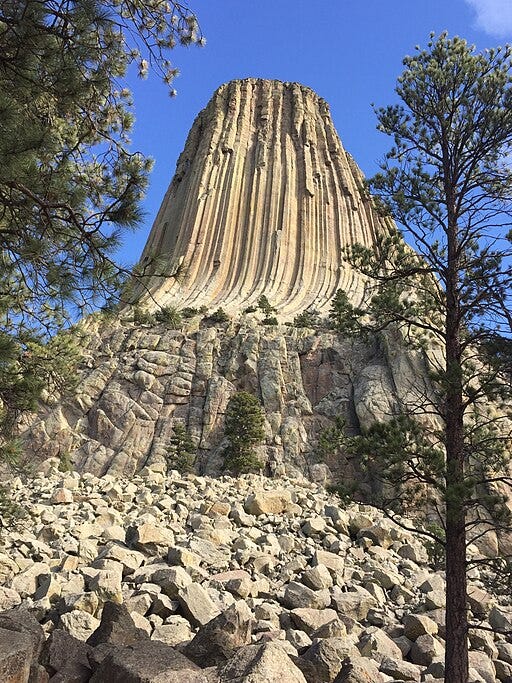
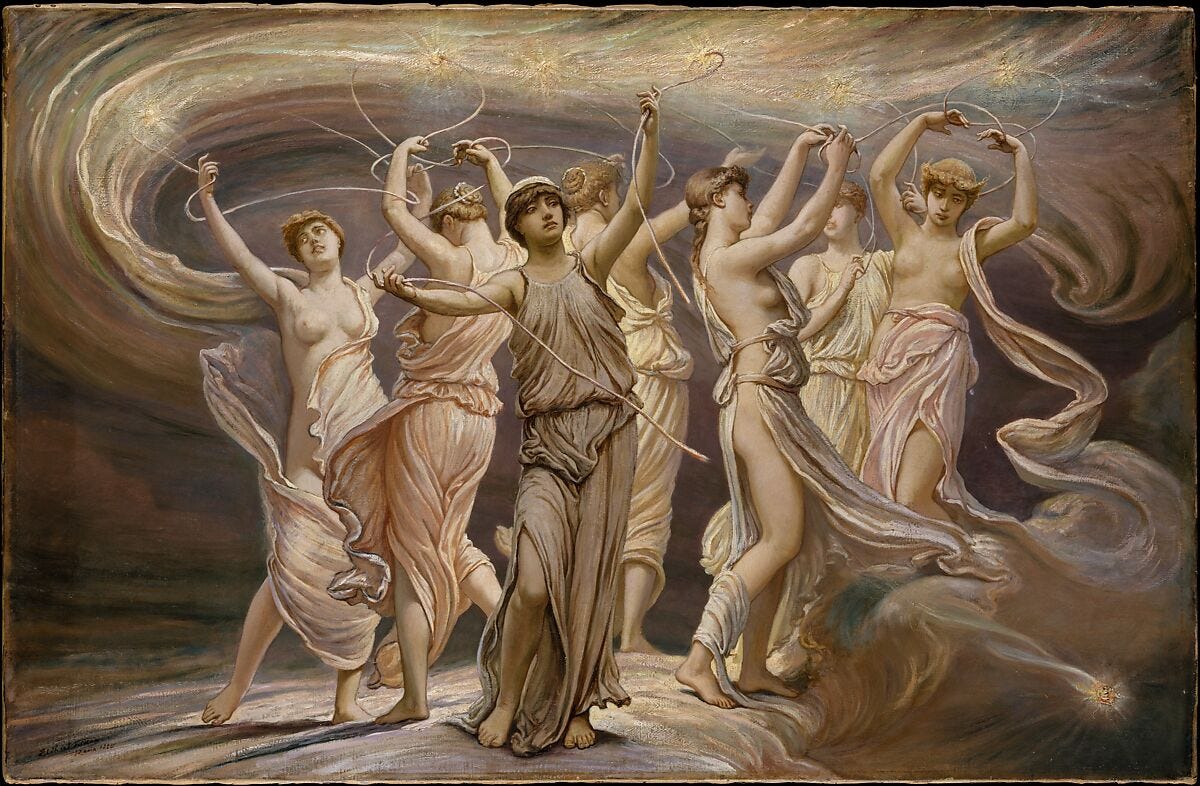
Often called the “Seven Sisters”, the name “Pleiades” comes from a Greek story about the seven daughters of Pleione. In Belarus and Ukraine, these stars are maidens dancing to honor the gods. However, sometimes these stars are brothers, as in the Danish and Serbian folktales where they must free a princess, or in many Native American stories where the 7 boys forgo their ceremonial chores to dance and play and become the stars (Caddo, Cheyenne, Onondaga, Haudenosaunee, and Ojibwe cultures). One story shared by the Kiowa and Lakota is a geomyth about the origin of Devil’s Tower. According to this story, seven young girls were being chased by bears, climbed a low rock, and asked it to save them. The rock rose into the sky, but is still marked by bears’ claws.
Many of these mythic figures are either descendants of the gods or the night itself, or the story ends when they reach the heavens. Interestingly, many of these stories share the addition or subtraction of a sibling. This could be because their number depends on visibility. However, this may also have something to do with the fact that stars in this cluster occasionally move; the stars Atlas and Pleione used to be distinguishable as two separate stars, but now often appear as one. However, it has been a VERY long time since this apparent merger occurred, so some scholars have suggested that the prevalence of the seven sisters may be rooted in a very, very old sky story, from before we spread across the world.
Seasons and Harvest
In “Works and Days” (which is essentially an ancient farmer’s almanac, dressed up as a poetic appeal to a lazy younger brother), Hesiod writes:
And if longing seizes you for sailing the stormy seas,
when the Pleiades flee mighty Orion
and plunge into the misty deep
and all the gusty winds are raging,
then do not keep your ship on the wine-dark sea
but, as I bid you, remember to work the land.
This was meant as a reminder to folks in Mediterranean climes that October and November are no good for sailing, but a great time to plough and plant. Similarly, in Africa, the Swahili name “kilimia” means “The Ploughing Stars”, and in the Malay archipelago, the “sparrow stars” mark the season for sowing rice paddies.
In other parts of the world, the Pleiades are a marker of the harvest, such as in Celtic Europe, where they mark the festival of Samhain, or in the Americas, where the Blackfoot story of the Pleiades marks the time of the buffalo hunt. There are also stories in which the Pleiades represent a granary (Ukraine), a storehouse (Andes), or a marketplace (Aztec), all of which indicate a bounty.
Several cultures also use the Pleiades to set their calendars. In Mesopotamia, the Pleiades were known as MUL.MUL, (this literally means star-star), and they were used to calculate intercalary months, or extra months needed on account of a lunar cycle that does not match perfectly to the solar cycle. To the Aztecs, the placement of the Pleiades helped to stabilize the 52-year calendar cycle. In Arawak and Maori culture, the Pleiades mark a new year. Hopi and Pawnee people have also been known to mark the passage of time in ritual by observing the Pleiades through the roofs of ceremonial structures.
The Sacred
The Pleiades can also be seen as a link to the divine, or, at times, to other divine worlds. The Monte Alto people of Guatemala claim the Pleiades as their place of origin and have built observatories based partially on their structure. For the Ojibwe people, “Bagone-giizhig” means Hole in the Sky, and it is said to be the gateway between our world and the star world, through which star people can travel during ceremonies. And during the Celtic Samhain festival, the “veil between the worlds” is said to be thin, allowing gods, fairies, and potentially the honored dead to pass through.
The Navajo creation myth details how the Pleiades are the very first stars set in the sky by the Black God, and this constancy is echoed in the Hebrew bible, where the “Khima” are referenced as a testament to the steadfast movements of the heavens. And in one of the most poetic references to the sacred, the Quran portrays “Thurayya” as a representation of the unknowable and the human quest for knowledge of mystery.
Other Themes
Some other themes I came across included flocks of birds, inanimate objects such as sieves or fishing nets, and a gathering, all of which make sense to me. Notably, the Japanese “Subaru” means coming together. The Japanese automaker Subaru chose this name (and iconography) to represent multiple companies merging. (Their old logos look a lot more like the Pleiades than the current one, in my opinion.)

Samhain
As you can see, there are MANY directions I could take this month’s cultural astronomy commentary. But this November, I’d like to feature Samhain (pronounced sow-en.)
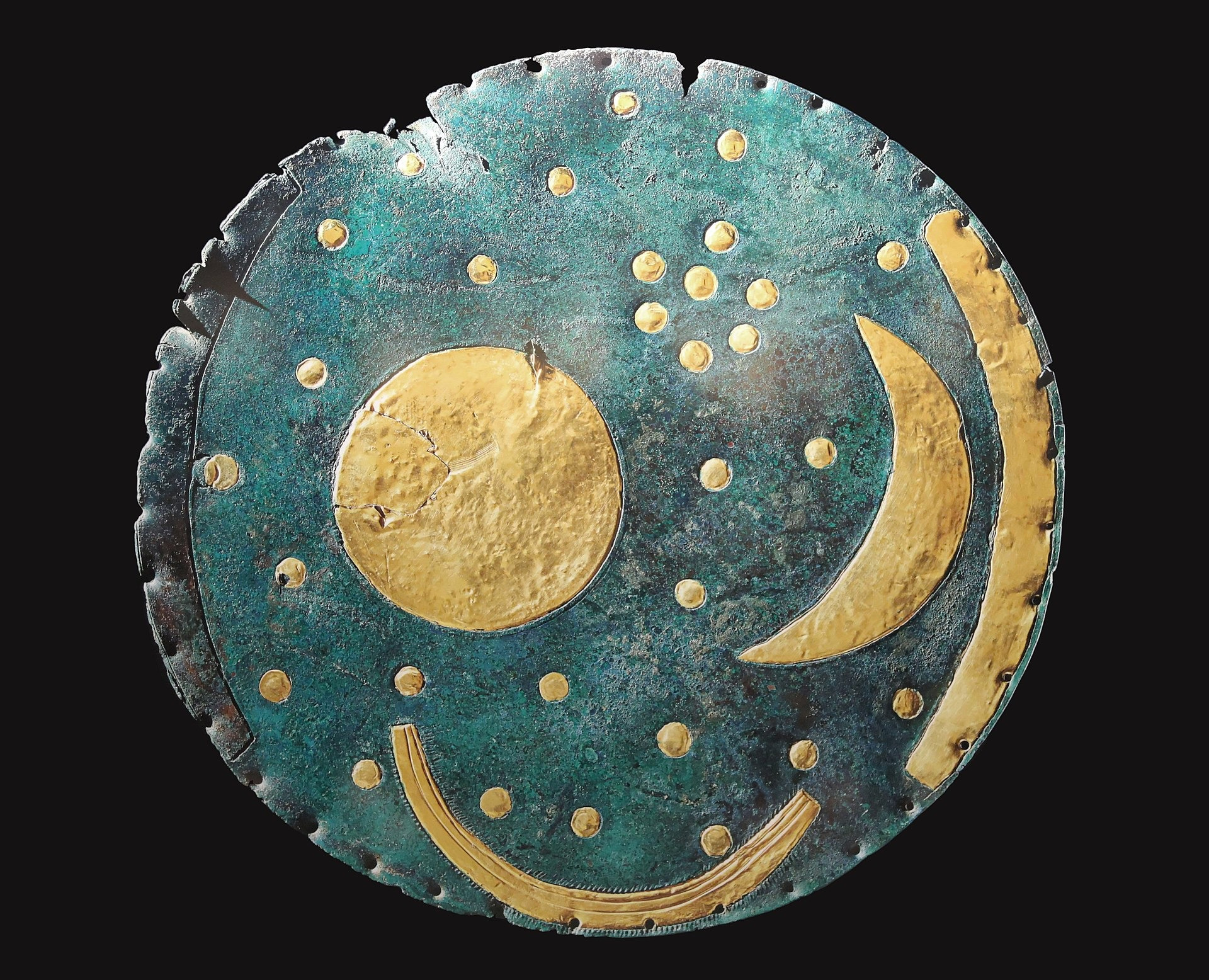
This ancient Celtic pagan festival is often called the precursor to Halloween. However, there are several holidays devoted to honoring the dead around this time of year, and historians debate nearly everything we think we know about Samhain. This holiday has been reimagined and incorporated into many modern neopagan traditions that celebrate astronomically important dates in the “wheel of the year.” Unfortunately, the holiday’s growing popularity has led to a lot of muddied waters and sloppy scholarship about which customs are truly ancient and pagan, and which are newer. Did they lay out a dummy-supper for their beloved dead? Did they drive cattle down from the mountains to purify them between two fires? Were the stone monuments with apparent alignments to the Pleiades a part of Samhain celebrations? We may never know. The holiday has a complex history, especially post-Christianization. However, it is clear that there truly was (and is) a harvest festival at this time, and that it signifies the descent into the dark half of the year, and the Celtic new year.
According to legend, Samhain was celebrated when the Pleiades reached their highest point in the sky at midnight, meaning they also rose at dusk and set as the sun rose. Essentially, the new year occurs when the Pleiades are opposite the sun in the sky.
In addition, Samhain is a cross-quarter-day celebration. This means that it marks the day directly between the Fall Equinox and the Winter Solstice. However, if you’re doing the math at home, you might notice that this doesn’t quite line up properly. In reality, the cross-quarter day is closer to November 6th.
As it turns out, Samhain celebrations predate the Gregorian calendar, but the October 31st date stuck even when calendars changed.
Furthermore, if you were to look out for the Pleiades at midnight, you would still notice them being about an hour off, and reaching the middle point of the sky closer to November 19. This is due to our old friend precession (or the reason why the zodiac is also off, and why Polaris won’t always be the north star). However, this all would have been accurate about 1000 years ago.
Nowadays, many neopagans will celebrate a blend of traditions for Samhain, often by honoring recent or distant ancestors with offerings, participating in a spiral dance, setting out a dumb-supper, practicing meditation or prayer, embracing the darkness, honoring deities associated with crossroads/darkness/underworlds, harvesting meat and mushrooms, and having fun celebrating the modern Halloween and Celtic new year with costumes, pranks, and carved autumnal veggies and gourds.
Monthly Challenge
Level One: Try to find a clear night to see the Pleiades.
Level Two: Try to count the stars in the Pleiades with just your eyes. How many do you see? (People all around the world have been doing this for millennia to test their eyesight.)
Level Three: Repeat levels one and two and see if you get a different result! Stay out a bit longer to see Taurus the Bull, or to greet Orion.
Event Updates
For the most part, we have had incredible weather luck with both iterations of my outdoor program, Night Club and Know the Night. However, last month, that luck finally ran out.
I wouldn’t cancel our program for rain—I had a backup plan that included a large tarp, heavy tree cover, and some indoor virtual stargazing. However, when I woke up on the day of our program to see a gale warning and a high wind advisory, I knew we were out of luck. As much as I want to practice embracing the dark, adding a downpour would definitely up-level the evening, making it less accessible. Adding high winds, however, made the evening downright dangerous. So, for the second time ever, we had to cancel.
But never fear! We already have the next Know the Night scheduled for the Spring Equinox, March 21st! I’ve already booked us one of the most beautiful parts of camp – the Wrangler Retreat Center, right next to our nicest, newest cabins, where you can spend the night. Registration will open mid-December and close mid-February, so keep your eyes on your inbox!
I am also officially living back on the mainland, so I’m available to book for stargazing parties and other night explorations!
In my final piece of darker news, I’m disheartened to share that my former employer has started running a program that looks to be a combination of a) my Night Club program, and b) a physically and psychologically dangerous “rite of passage” experience they also run, which I experienced and gave some critical feedback about shortly before being laid off. I know that sharing this information is controversial because many members of this mailing list are only here because you found Night Club through my former employer. And unfortunately, that’s exactly why I feel compelled to share this here.
I do not know whether the feedback I gave was ever incorporated, or whether the culture has changed in the last year and a half. However, what I witnessed and was part of was not okay with me on educational or even moral grounds. Please understand - I have no beef with most of the staff, who are lovely, talented individuals who genuinely want to awaken people to nature. I know what the organization was going for and appreciate the effort that went into the experience they were trying to gift – I just can’t stand behind what was done, or how it was done. My guess is that if you liked Night Club, you might be interested in this new program. If you are looking, I need you to know that I do not know what they are teaching, but based on my experiences, I cannot recommend it in good faith, nor do I want to be associated with it. This is despite the fact that their program looks a lot like the work I have been trying to do to get people outside to embrace the night and the dark. That is all I wish to say in a public forum at this time, but if you have questions or would like to discuss, please reach out. I’m happy to share more about my experience and teaching philosophy.
Phew. With that all being said, I hope you’ll all stick with me as I continue to share and teach about our connections to the sky. Have a great November, and check out the Pleiades.