
A Quick Note: I’m experimenting with a format choice where readers can become listeners, and get the same content in audio form for a couple bucks. You can listen to this month’s newsletter for free while I tinker with the feature.
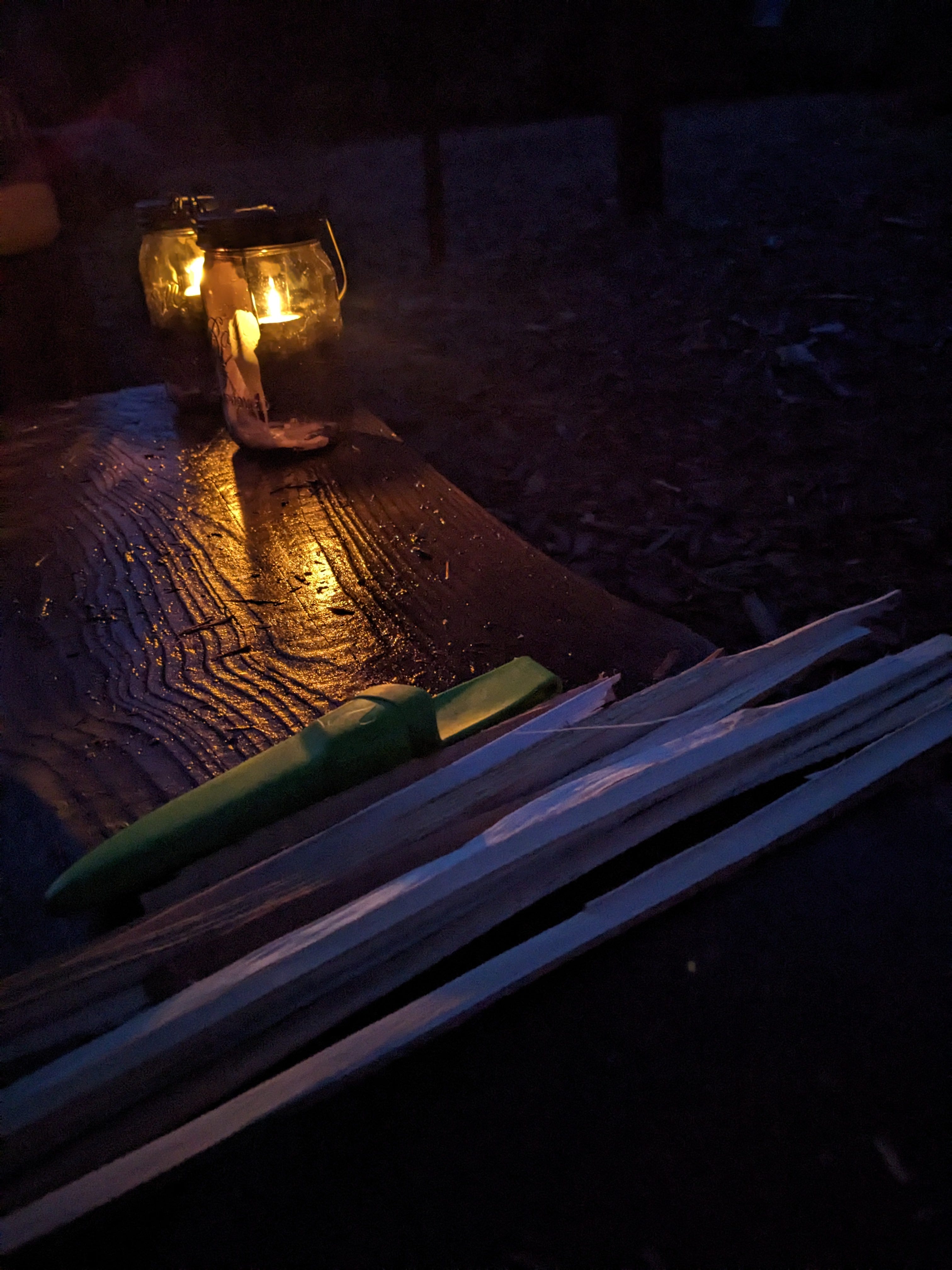
The winter solstice is my favorite time of year for cultural astronomy. No matter what other stories, beliefs, rituals, and deities we have in our culture, it’s impossible to ignore how much the absence or presence of the sun affects our lives and all of life in our world.
For as much as I love the night and the darkness now, I wasn’t always so chipper about it. I was born in Washington, and don’t remember much about my family’s move to Florida when I was 4, but I remember a LOT about moving back to Washington at the age of 10. Seasonal Affective Disorder hit me like a ton of bricks that year.
Not only did I jump almost 20 degrees in latitude - it was also my first year of middle school, my first year of public school, and I was 3,000 miles away from all of the friends I’d grown up with. I vaguely knew of wool as a scratchy substance not to be messed with and didn’t understand why a jacket couldn’t keep me warm or why it was dark when my school bus picked me up and dropped me off. My parents had their hands full with my toddler-aged twin siblings, and to top it all off, when we got to December (a time I could usually rely upon to be full of magic and cheer), I was enlisted to help Santa - a duty that I was aware of but not emotionally prepared to accept. I was in freefall. That winter was the first of several long, dark nights of my soul.
It took a very long time for me to befriend winter on my own terms. At first, this process was driven by spite, and rage against the dying of the light. But eventually, I embraced the process of creating my own inner light as an act of self-love. And once I knew I could always return to my light, I learned how to love my inner darkness. But it is a practice. And it has not always been a linear process.
As it turns out, there are important things to do in the dark and cold seasons of our lives. And we can learn how to face these things by practicing the cultivation of our spark. It’s the flashlight in our pocket that we know we could use if we needed to on a dark walk that allows us to build the trust to walk farther without it. It’s the knowledge that you can start a campfire to return to after you lay on the frozen ground and let the frozen earth sip your warmth away. It’s the web of connections we share with each other and the world around us that remind us that we have places we can turn when we feel alone.
And also, sometimes winter is hard enough without practicing our resiliency. It is good to rest. And it is nice to lean into the light and warmth of others.
It is my hope that this dark season shows you something beautiful, whether it is the darkness or lightness within or without.
And now, for some poetry:
The Shortest Day
by Susan Cooper
And so the Shortest Day came and the year died
And everywhere down the centuries of the snow-white world
Came people singing, dancing,
To drive the dark away.
They lighted candles in the winter trees;
They hung their homes with evergreen;
They burned beseeching fires all night long
To keep the year alive.
And when the new year’s sunshine blazed awake
They shouted, reveling.
Through all the frosty ages you can hear them
Echoing behind us—listen!
All the long echoes, sing the same delight,
This Shortest Day,
As promise wakens in the sleeping land:
They carol, feast, give thanks,
And dearly love their friends,
And hope for peace.
And now so do we, here, now,
This year and every year.
Welcome, Yule!
Cultural Astronomy Corner
A few years ago while visiting the Denver Museum of Nature and Science, I attended an incredible temporary exhibit about Stonehenge. There were life-size stones, scale models of the lithic site throughout the ages, timelines, tools, bone shards from trash pits used by feasting peoples, and other interesting stories and conjectures.
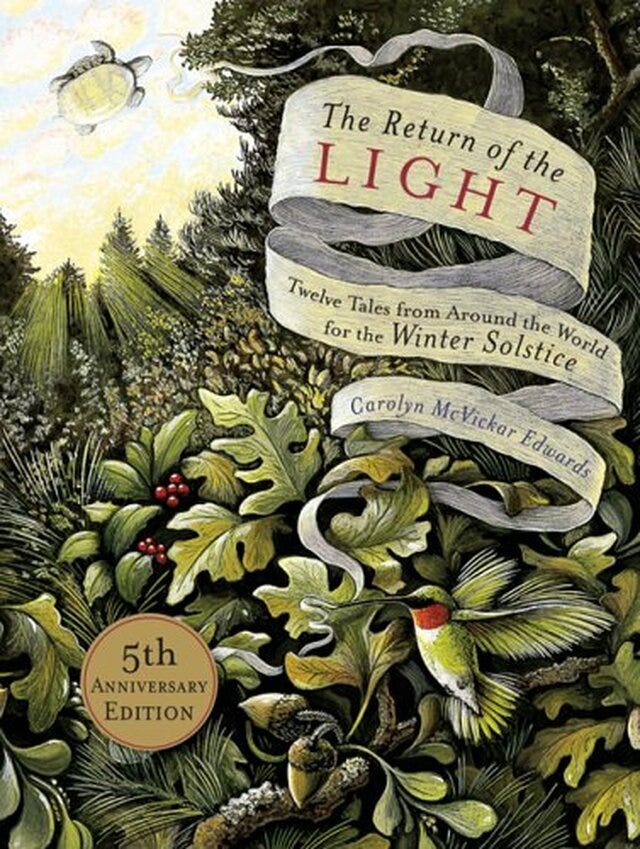
One of my greatest takeaways from the exhibit was just how long a version of this stone monument had been standing, tended to, and built upon by people through the ages. But my other great takeaway in a physical sense was a book from the gift shop by Carolyn McVickar Edwards entitled “The Return of the LIGHT: Twelve Tales from Around the World for the Winter Solstice.”
Inside, there are stories from across the continents and islands of the world, each having to do, if not with the solstice itself (as some do), then with the cycles of light - birth, death, and regeneration, and with the ways we cross through the night - by theft, surrender, or grace. The back of the book also contains rites, games, and songs that can be performed at the solstice.
One of my favorite stories in the book is a longer Inuit story called Raven Steals the Light, but today I’ll share a slightly shorter tale about another famous trickster that you can read around the fire or by candlelight. It’s a Norse story about cycles and mistletoe: Loki and the Death of Light. (Click link for pdf.)
Live Event Updates
I’ve been reflecting on the sweet Bardic Circle we had for the solstice last year and the stories and songs we shared as we passed an elk antler around. While we couldn’t make that happen this year, we do have some updates, including….
A Save the Date for February 1st! Candlemas, St. Brigid’s Day, Groundhog Day - whatever you want to call it! We’ll be honoring the return of the light with a lantern walk after dusk on Saturday, February 1st. The sun will be setting around 5:11 pm, and we hope to gather at 5:00 pm, walk somewhere, put our lanterns down for a game, a song, or a sit at the midpoint, then head back, concluding by 7 pm. The location is TBD, but we will have more information by our next missive, mid-January!
I’m also in talks with Camp Sealth about bringing Night Club to Vashon Island. One of the camps they offer kids in the summer is Nocturnal Camp, where campers slowly shift to an entirely nocturnal schedule throughout the week to experience night hiking, padddleboarding, games, and more. They’re fully onboard with offering an activity like Night Club during the shoulder season, so you might see one or two of those on the docket for this spring if you feel like venturing out.
Finally, as my ferry schedule begins to even itself out, I’m officially on the hunt for new locations on the mainland and hope to hear back from some organizations after the holidays.
Skywatching
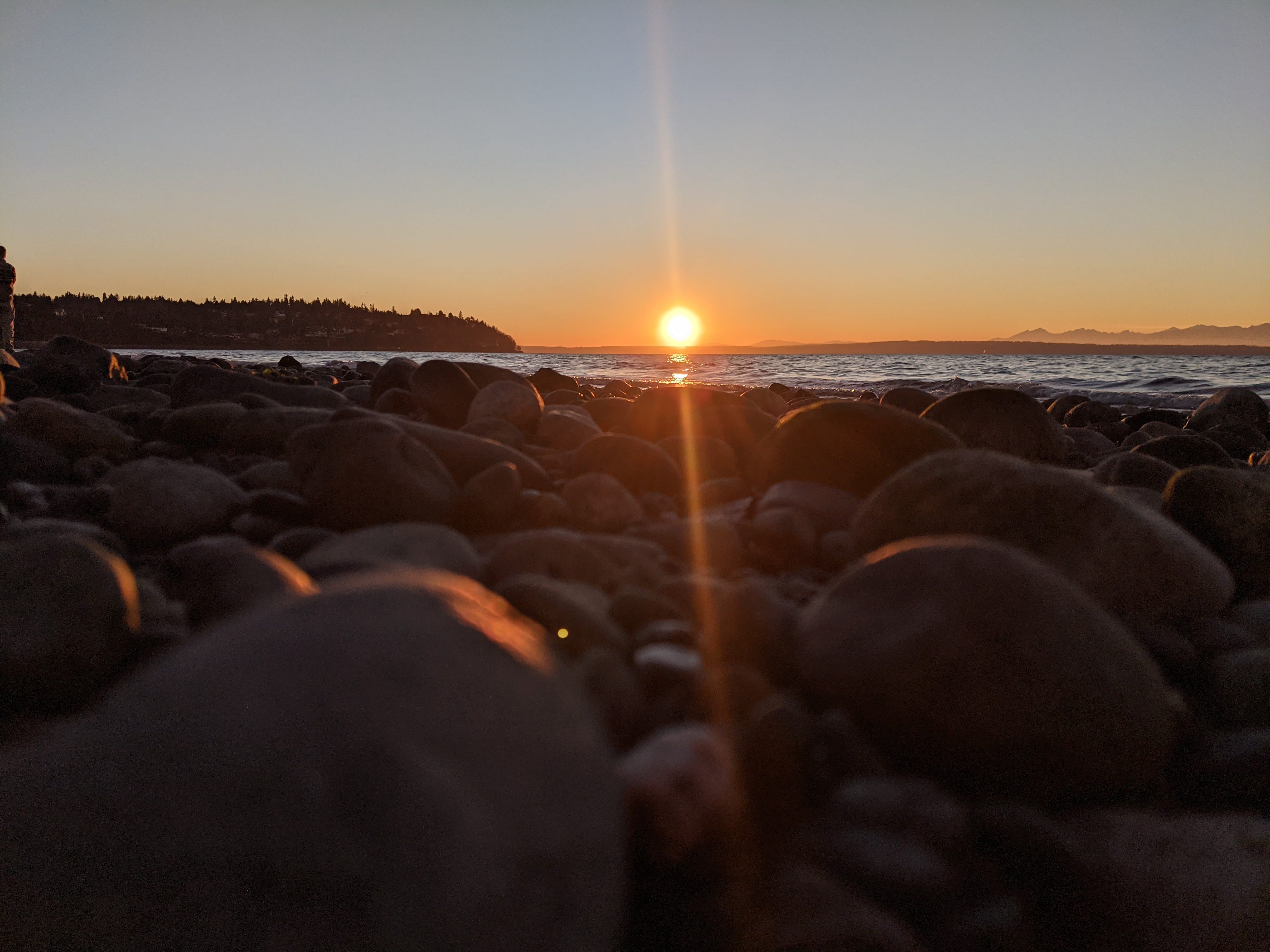
This is one of the critical times of year for one of my favorite skywatching activities: creating a horizon calendar!
The next time it isn’t too cloudy, head to a place where you can see the horizon. Pick either the eastern horizon at dawn, or the western horizon at dusk. Take a look at where the sun is rising or setting and make a note of it. Take a picture, even! This will be a point of reference.
The word “solstice” means “sun stop”, because from our perspective, it is the point at which the sun stops moving along the horizon in whichever direction it was going.
In the winter, our sun rises and sets further in the south each day until this week, when it appears to stop and rise in the same place for a few days. With baited breath, people have watched the horizon at the solstice, hoping to see the sun’s return in the opposite direction.
This year, the moment of solstice is December 21st, at 1:20 am. However, any time that you can get to a horizon-viewing platform between now and the new year, you will see the sun at its approximate lowest point on the horizon.
If you can’t return to this same place throughout the year, I suggest returning as close to March 21st as possible (for the equinox), and then during the week of the summer solstice, June 21st.
This is especially fun in our region because we have mountains to both the east and west, and mountains make fantastic markers for the horizon.
Throughout history, many people have either placed their civilizations and important buildings based on important horizon markers in the distance (often marking the solstice or an important feast day) or have placed important buildings or markers along the horizon to do this artificially.
This horizon-based archaeoastronomy is one of my favorite things to study.
By the way, if you keep watching after the sun sets (or take a break to warm up and come back out), you may catch the Geminid or Ursid meteor showers.
That’s all for this month. I’d love if you shared anything you liked in this newsletter with friends, especially any folks you might want to take with you to our lantern walk next month. I hope you have sweet solstice dreams and keep your inner flame tended.

