Shadow Sky Stories
Puppets, projections, and principles of storytelling.

“Humans are storytelling animals”, I explain to a group of middle school students. “Of course, we entertain ourselves with stories - books, movies, TV, and video games. But stories are also the backbone of science, history, current events, and even the trajectory of the sports teams you follow. It’s how we make sense of every event that includes us or happens to us.”
The room monitor, who happens to be the outdoor skills teacher in this district, chimes in to share a hypothetical about foraging, and how stories help us to remember and share the places we’ve been and which berries are edible. He’s just made my next point.
This is the introduction to “Shadow Sky Stories” - a planetarium show all about the art of telling explainer stories, using Greek sky myths as a jumping off point.
In this program, students spend an hour in the planetarium, watching how processes unfold in the sky, listening to stories about these sky phenomena, and helping to dramatically act them out using shadow puppets in the light of the planetarium projector. After this, they receive some tips on storytelling and structure, come up with their own stories in small groups, create their own shadow puppets, and share their story with the group.
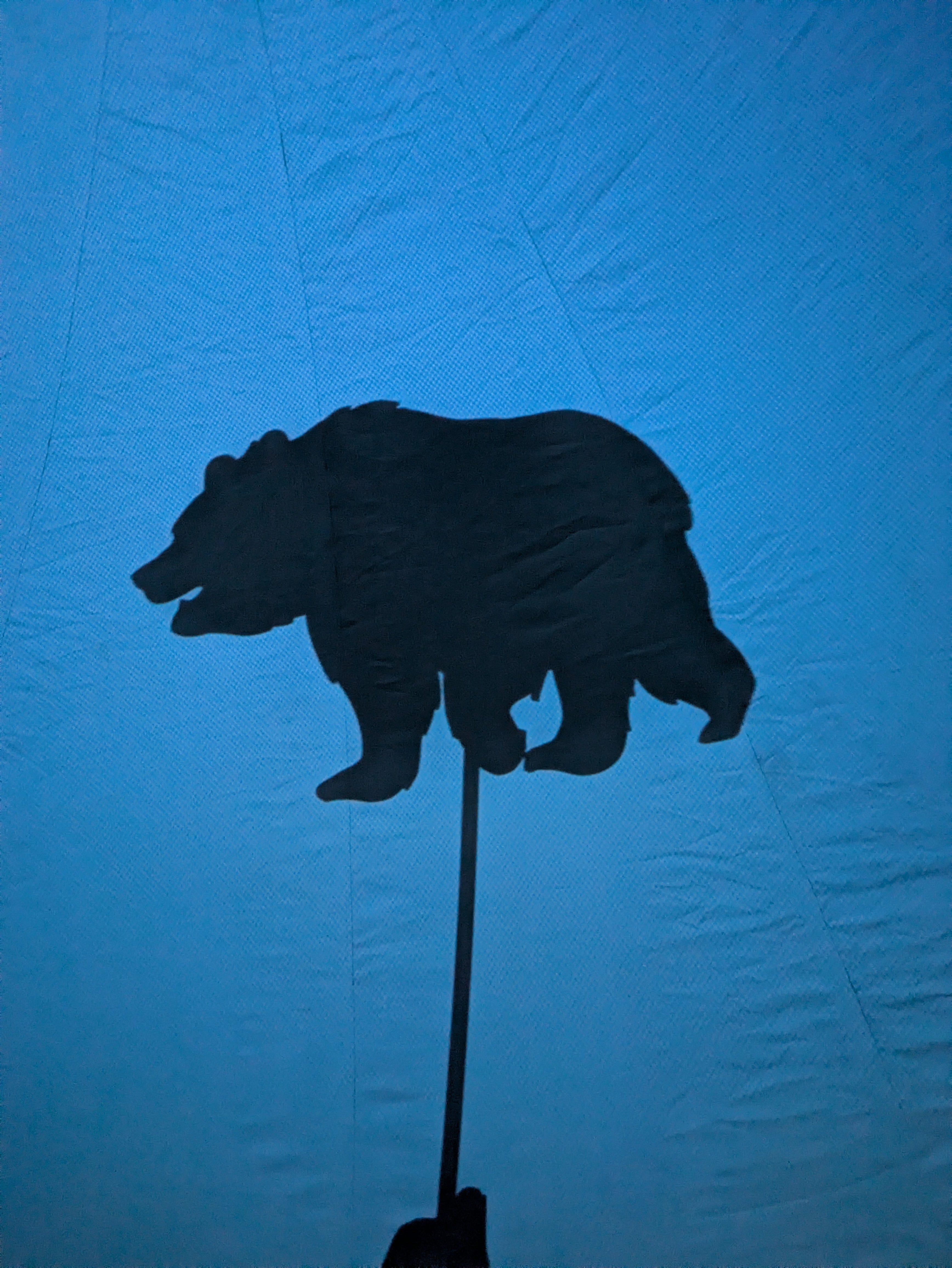
My favorite story of the day came from a student who chose to work alone and adapted a handwritten story from their notebook. I was touched to learn that they chose to share the creation myth of their home island of Guam, complete with shadow puppets of villagers, fish, and the island itself. This was an impactful moment for the class, as we’d discussed that we were working with Greek myths because they are already widely disseminated and adapted, and that I wasn’t necessarily the appropriate person to tell stories from all cultures, but that they could tell their own.
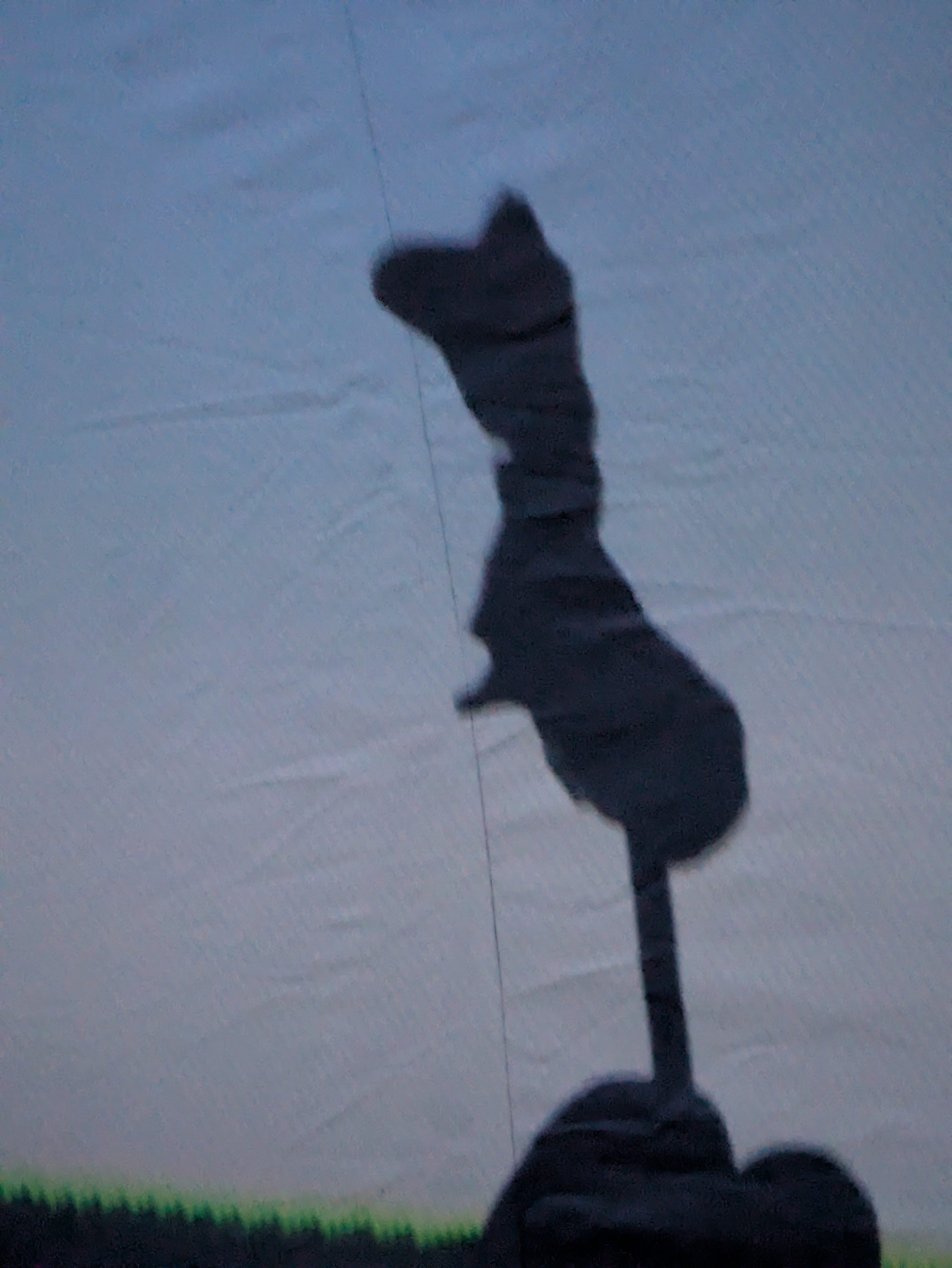
Two other groups ran with the Greek theme: one retelling the story of Icharus flying too close to the sun with a pair of detachable puppet wings, and another with a Spartan/Cyclops fight, where the monster’s detached eye became the sun.


Another group told the story of a hedgehog whose ejected quills pinned a predator wolf into the sky, with pinpricks of light becoming a constellation.
A final group played with the physics of light and told the story of a giant baby attacking a city. (They were middle schoolers after all.)
I really love the adaptations that have been made to this program. Once upon a time, about eight years ago, I devised a similar show playing with the planetarium projector for The Museum of Flight called “Summer Sky Stories of Alexandria.” The show had a living history component, and its focus was on traveling back to the time that Claudius Ptolemy wrote The Almagest to learn about the origin of modern scientific constellations. It was a product of several specific constraints assigned to me, and threaded a seasonal programming needle at the time.
The show wasn’t a hit, but the shadow puppets in the dome were a novel concept. I wound up presenting the show at the Live Interactive Planetarium Symposium, and it was featured in the industry journal, the Planetarian. I also wound up presenting a version of it with planetarium company Digitalis at The American Astronomical Society.
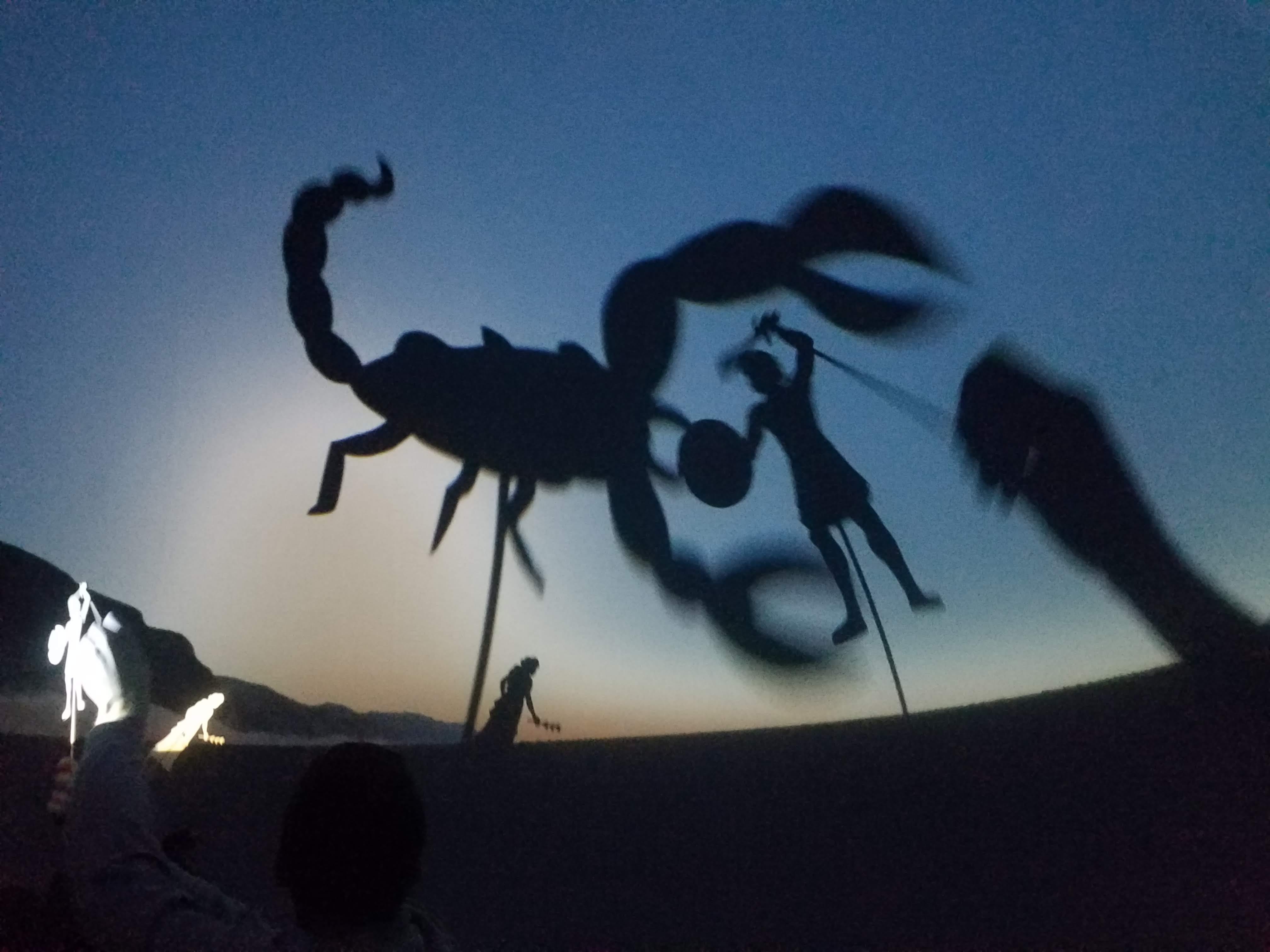
Programming needs changed after that season, so it was never offered in earnest again. But I’m very happy with the changes I’ve made to the show with eight more years of knowledge and experience. You can now book a two-hour Shadow Sky Stories workshop for your group for $350.
Know the Night: Registration Opens July 24
My signature outdoor program returns this fall on Saturday, October 24th at Camp Sealth! Even more exciting - we are once again able to make it FREE for all to attend.
This fall, registration for Know the Night will be slightly less cumbersome. We will be running it through a simple online form that does not require an Ultracamp account, and registration will be open up until the day of the event, or until the camp is full.
Notably, cabin reservations will now be separate. These will still be on Ultracamp, will still cost $20 per person, and will close two weeks before the event date, on October 10th, in order to ensure that we have enough cabins chosen, cleaned, and assigned prior to the event.
You will also be able to register to stay Friday night (October 23rd) in addition to Saturday night. This is helpful if you would like to volunteer at Camp Sealth’s service day on Saturday morning, or if you just want to stay the whole weekend.
Registration will open later this month on July 24th, here.
Other Sky Updates
Summer Constellations: After the sun sets, look to the southern horizon to see Libra, Scorpius, and Sagittarius. If you’ve got dark skies, look between Sagittarius and Scorpius to find the heart of the Milky Way.
Twilight Planets: After our Venus/Jupiter kiss this month, Jupiter is fast fading and sinking into the west, and will cross over into the morning skies by the end of the month. Venus, however, stays nice and bright in the twilight hours this month, although it’s starting to get a bit lonely, with the rest of the planets hanging out in the morning skies.
Aphelion:On July 6th, Earth is at Aphelion, meaning we are as far away from the sun as we will get all year. (Sometimes this lines up with July 4, which is fun, but not this year.)
Meteor Showers: At the end of this month, look out for the beginning of our summer meteor showers, with the Piscis Austrinid Meteor Shower on July 28, and the Alpha Capricornid and Southern Delta-Aquarid Meteor Showers on July 30th.


Fun little personal extra: I got to tell some Greek sky stories with preteens this month, but I’ve also been having a separate foray into Greek myths. By the time this newsletter is out, I will have opened and closed a new play, “One Thing After Another” by Jennifer Dice at Ghost Boat Theatre Company. It has been a fun journey, music directing a jug band of “Toga Stompers”, and playing the goddess Athena herself as she desperately tries to stop a series of sailors calling themselves Odysseus from making terrible mistakes.
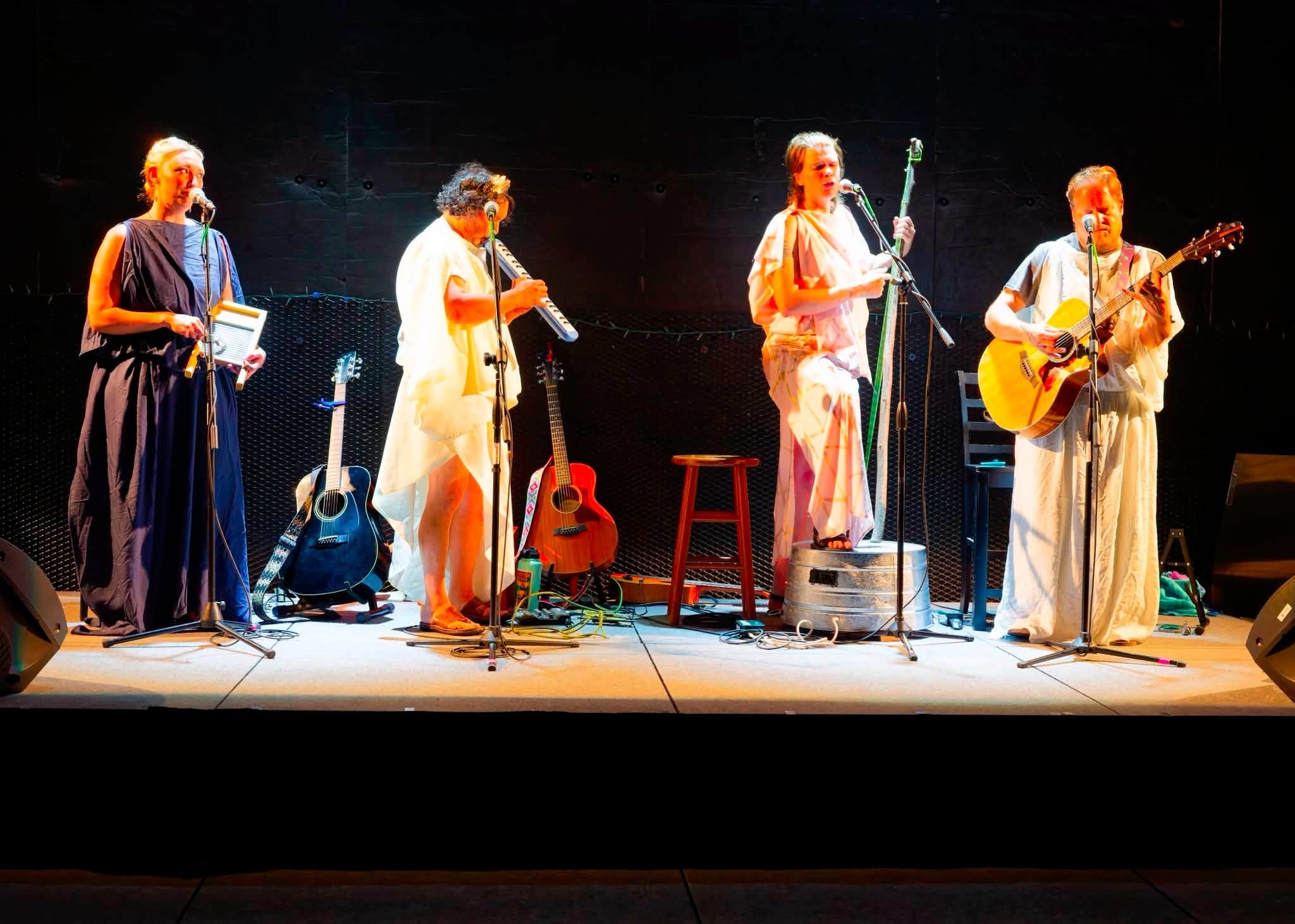
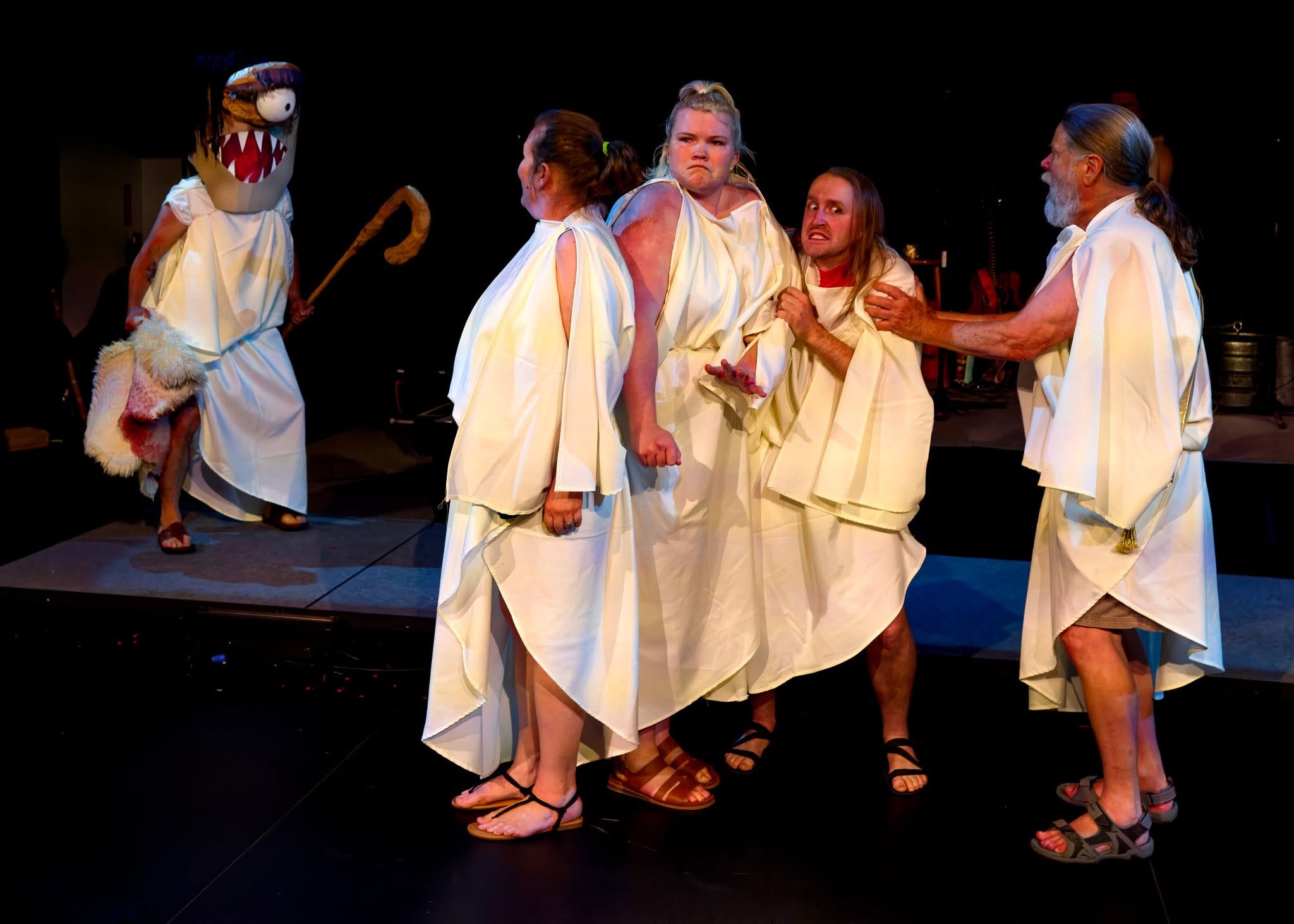
My summer of theatre continues for the next two months, so expect that August will also be a short blog. But reach out now if you want to book a show or workshop for the Perseids Meteor Shower mid-August, or any time after that!