Migration and Mystery
A reminder to take a little walk.

The dog pulled at her leash as we rounded the final corner of our walk. Overwhelmed by the week and not wanting to make decisions, I let her choose the route. But after choosing just about every shortcut in her anxiety to get home (this is normal - she’s always anxious), I was beginning to feel a bit robbed of my walk. My brain needed a longer stretch break. I obstinately slowed down to get a better whiff of a blooming tree, and stubbornly, to remind her that she’s not the only one who gets to suddenly halt to smell something. That’s when I noticed something.
A bird I’d never seen before.
I know the crows that live near this corner - there’s a pair of them, and one of them has a bit of a folded wing. I coo a gentle hello whenever I see them and hope they remember me, just like I do for my favorite rabbits. (I especially hope they remember that I do not always come armed with a curious canine.)
I prepared to greet the bird on the sidewalk when I suddenly realized this was not one of my crow friends. In the shadow of the tree, its dark head had fooled me for a second, but it wasn’t black, and it was too small. Not small like the familiar finch, chickadee, junco, or towhee, but perhaps, robin sized? But that wasn’t right either. And unlike all of these birds I knew, it sported a spotted pattern in its wings. The neck wasn’t right for a dove, the head wasn’t right for a woodpecker, and it certainly wasn’t a hawk.
I held the dog’s leash close and crooned a hello, wanting to get a better look before it flew off. It hopped a bit down the path, bounced back into the yard, and joined a small flock of friends. After a few moments, they were off.
And here I am, typing on the roof, still thinking about the birds and hoping to see them again.
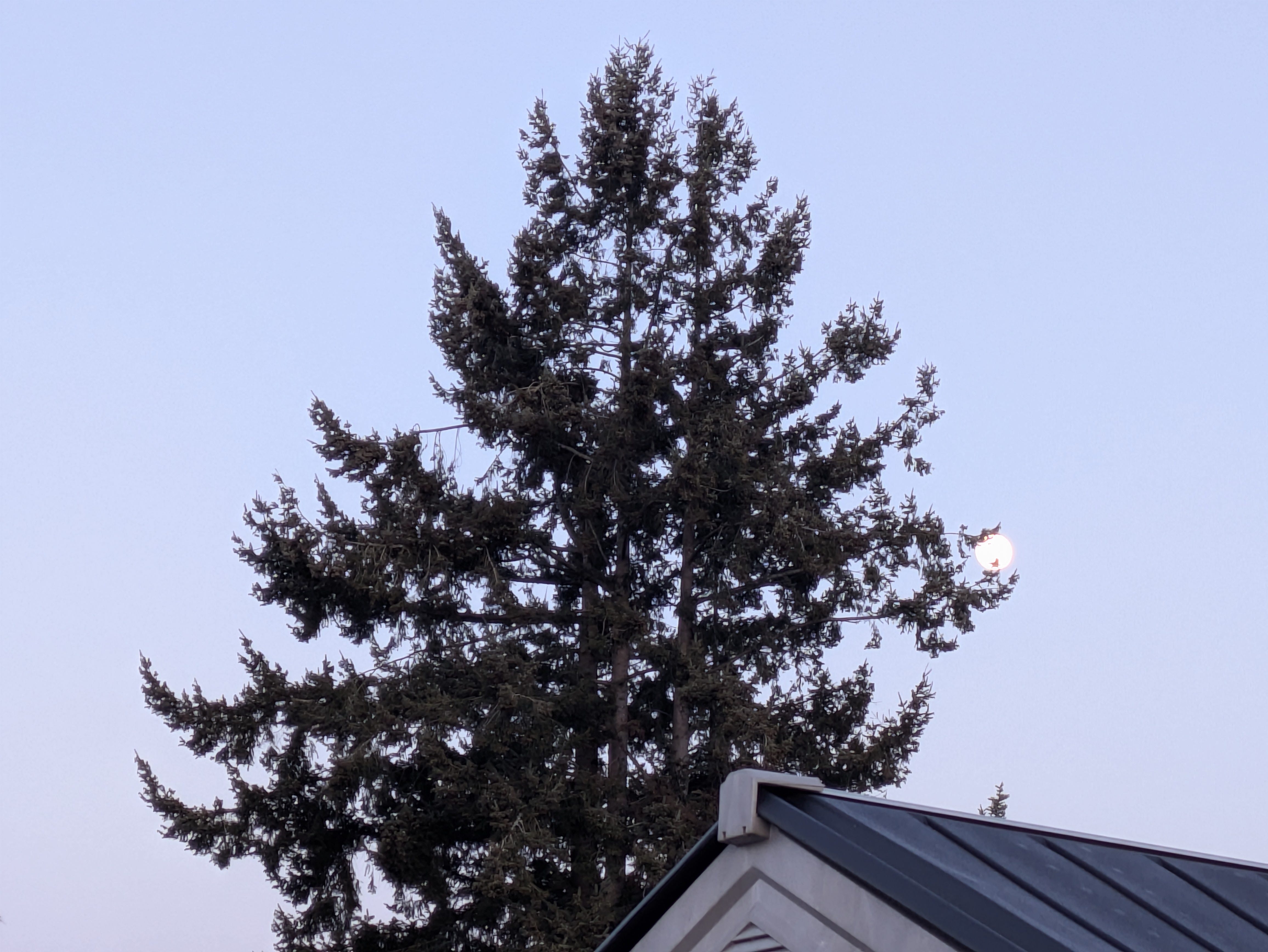
If I hadn’t gone out walking, I wouldn’t have slowed to sniff the tree, noticed the bird, or gotten curious. And if none of that had happened, I wouldn’t have discovered that there is a major bird migration this week, with 3-5 million birds estimated to fly over the state of Washington each evening. According to Purdue AeroEco Lab, “the 90th percentile of predicted stopover density” is occurring over just 3 nights this week. You can even watch the data come in, in real time.
I also would not have discovered that Audubon societies around the state, especially in the city, are urging people to turn their lights out from 11pm - 6am this week, as the light pollution and skyglow can be disorienting. I learned that birds often travel at night because they use the stars to navigate.
Incredible.
I still don’t know who my new birdfriend was, but I’m leaving some room for the mystery. Like the prince with a glass slipper, I’m sitting up on my rooftop, hoping to catch another glimpse of it before it’s too dark for my eyes to make out its distinguishing features. Maybe I won’t ever know, and that’s okay too. As curious as I am, right now it feels beautiful and romantic to hold that curiosity and not have to know.
The other day I met with two of my colleagues about an upcoming show we’re working on, and at the end they spent a few moments showing off their bird tattoos and sharing how they had both become “bird people” in recent years. Everywhere I go actually, I am surrounded by bird-lovers and bird enthusiasts. I, myself, have been waiting for the bug to bite.
Don’t get me wrong – I love birds. On a recent trip to see family in Florida, I had a hell of a time checking out all the sandhill cranes, ibises, snowy egrets, pelicans, and shorebirds. When visiting Hawaii, I cried over the plight of the recently extinct ʻōʻō bird and fawned over nēnē geese. I care for the geese at camp, the crows in my neighborhood, my friend’s ducks, and my mom’s chickens. However, I have never been as rabid about birds as the wilderness people I knew who would wake up hours before dawn to sit in the rain and map chirps and alarm calls to get an audible picture of the forest. (To be fair, this is a more extreme bird-watching behavior than maybe most bird-lovers are aware of, and an unfair measuring stick.) But even to a more casual bird-nerd, I’m a bird appreciator, not a cataloguer.
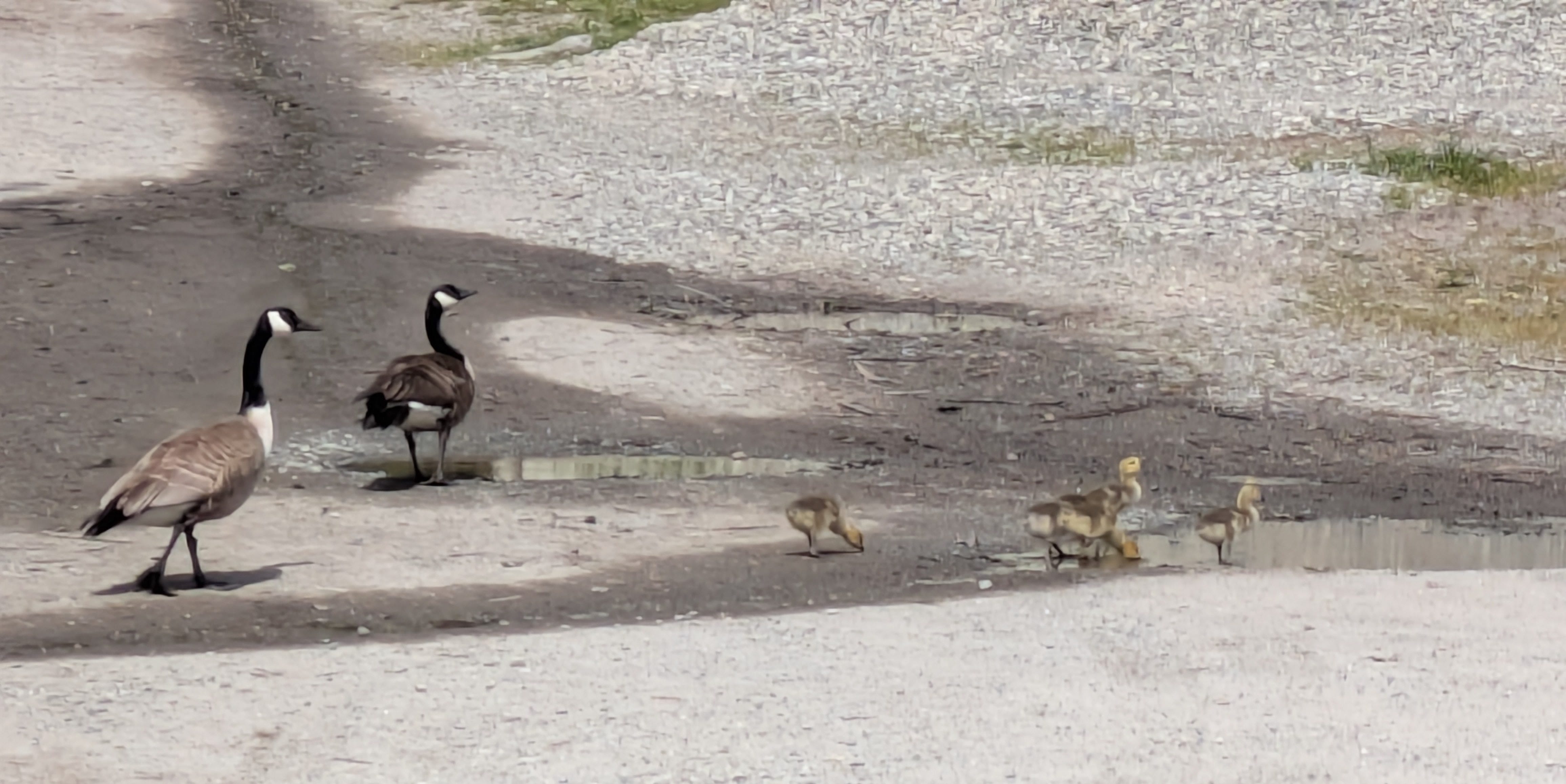
This is why, when a colleague recently asked about my interest in/experience with birds, I diverted. I explained (as I have to my wild nature friends previously), that while I liked birds, my real hook into the natural world is natural light, and its variation and gradation, and thus, the sky. The sunlight dappling the leaves. The quick changes at twilight. The bright twinkling of planets and stars. The magnitude, coincidence, and chaos of an eclipse.
I have been so enamored with light and the sky for so long that I have made it my business to know what’s going on out there and how things work, and people (maybe even you, dear reader), look to me for that. Outside of that, I have a job where I hold many deadlines, schedules, facts, and decisions for others. It is nice to remember that among the many other things that people have come to expect of me, I don’t have to be a voice of authority about birds (or clouds, planes, or pollution, or pollen), even though these things are also in the sky.
It is fulfilling enough sometimes, just to observe and to wonder. Not for anyone else or on anybody’s timeline. Not to discover something new to add to the human web of knowledge. But just to experience private moments of subtle joy.
One of the assignments I was given while studying Cultural Astronomy at UWTSD was a sky journal, where we were instructed to observe, write about, and photograph one object or phenomena in the sky for a month, then write a paper about our experience with reference to a quote about enchantment. My paper was about the evening twilight, and in particular, I wrote about light quality, crepuscular creatures, and liminality.
This last year my professor, Dr. Nicholas Campion published a paper reviewing the activity in the journal “Culture and Cosmology”. You can find it here: The Postgraduate Reflexive Sky Journal: Teaching the Inspiration of Astronomical Phenomena at the University of Wales Trinity Saint David.
It is, admittedly, academic and dense, but it was an interesting read for me, in part because it was a nice reminder of a project I enjoyed immensely, and in part because it was a peek into the minds of my professor and fellow students. I never got to read anyone’s sky journal, but the article contains samples of three student papers.
Unsurprisingly, but each of the students initially set out to track something and wound up having enchanting observations about something else as time went on. One set out to track Jupiter but wound up anticipating the interplay of the moon and clouds. Another with a pagan background and familiarity with the moon set out to track the moon and found a renewed relationship with its true cycles, rather than the Triple Goddess interpretation she’d grown up with, as dictated by Robert Graves. The third tracked the sky as a whole and found that for him, technology and architecture sometimes complemented, rather than detracted, from his experience of enchantment with the sky.
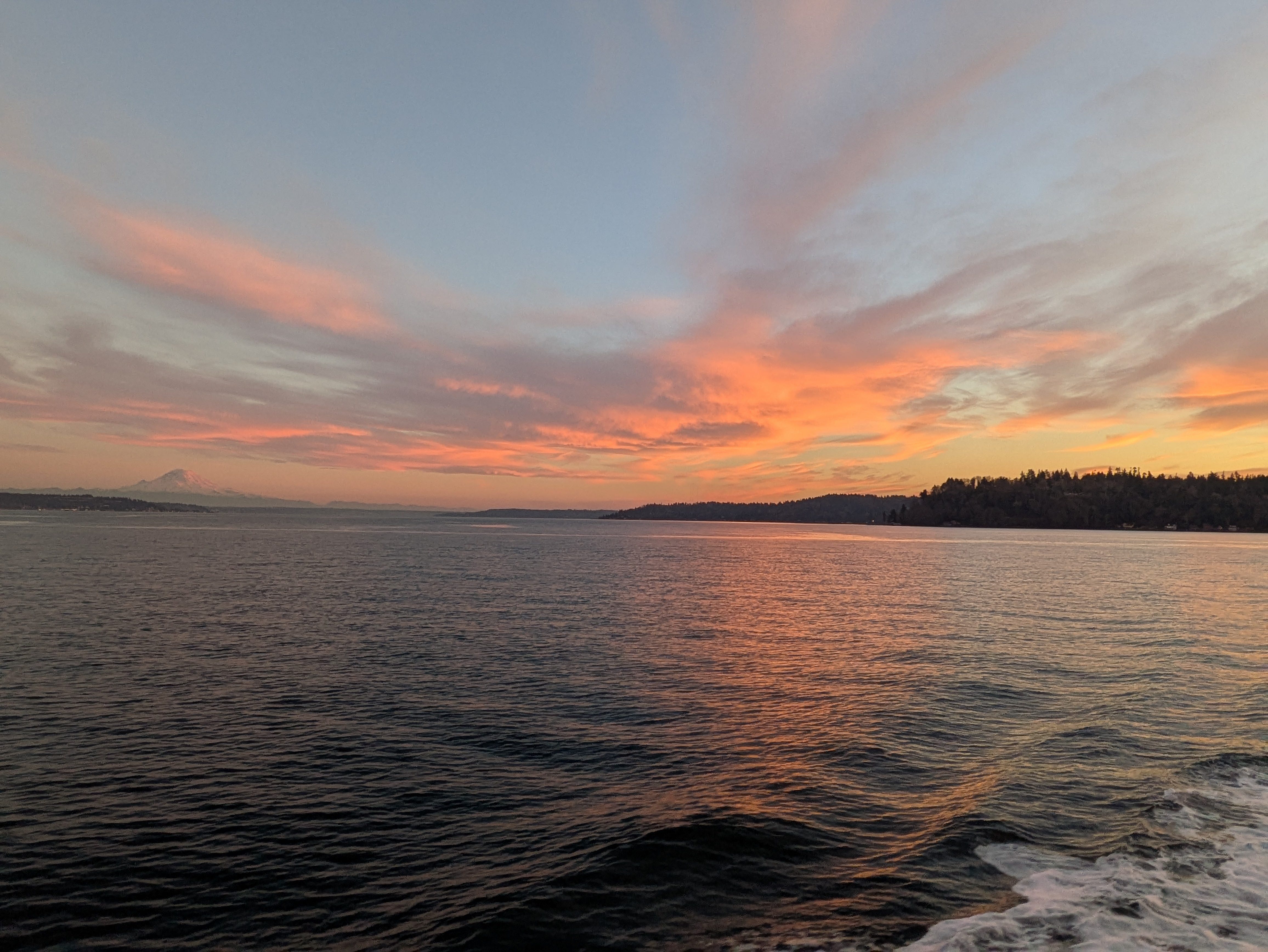
For me, the Sky Journal project was an intense recommitment to a practice I had already held privately: going on long walks after work, voicenoting my thoughts, and attempting to capture moments of intense beauty with a camera phone. (This last part rarely works.) But in this practice, over the years, I have been curious and wondrous of many a lovely thing. It is one thing to know, intellectually, that the moon has phases, the Earth rotates, and Venus is in the sky. It is another thing entirely to discover and experience these things as a passenger of the Earth.
(I was going to link to my previous writing on this topic, because I really thought I had posted about it already, but I can’t seem to find it here, so it must have been in an email I sent to the old “Night Club” Google group. Now that I know it’s missing, perhaps I will share it later in the summer.)
While I highly recommend keeping a journal about anything you want to understand better for any length of time, even if the contents of that journal are all vague poetry, jumbled thoughts, and poorly sketched drawings, alongside some direct observation, this month’s challenge is much simpler than that:
It is simply to go outside, let yourself get carried away from your to-do list for a few moments, and experience your curious, romantic self.
Dates of Note
This month there isn’t too much chaos happening in the sky, but look out for these things:
Venus: All month, Venus is creeping closer and closer to Jupiter. Already, these two can be seen in the same part of the Western sky, just after sunset. As Venus gets closer to Jupiter, you will be able to see it for longer in the sky. Check for a beautiful alignment of Jupiter, Venus, and the moon on May 19th.
Mercury is crossing to its evening position around May 14th. It will get closer to Venus and Jupiter throughout the month, with a nice alignment visible starting around the 19th as well.
Go check it out! And when you do, remember to think to yourself - those are OTHER BODIES that orbit our same sun! We’ve sent stuff there! Isn’t it incredible that we can see other planets? And isn’t it incredible how small they look, and how fast/slowly we see them change in our cosmic racetrack? Wow. That’s rad stuff.
Finally, here’s a video the Camp Fire Marketing Coordinator put together from Know the Night in March.
Even though the next one isn’t until October (with registration open this summer), I’ve already been in planning meetings, and I’m excited to share that we are planning to make registration faster, freer, and easier to bring friends to. :)