Back in the Dome
Teaching in the Planetarium

This month I got to do something I haven’t done in a long time: teach a 5-show day in the planetarium. (My record is 17 shows in one day.) It felt incredible to be back in the dome, getting into a rhythm, and bringing my Introduction to Stargazing class to 5 classes of 6th graders. It was even sweeter that I knew some of these kids from helping with their school musical earlier this spring.
It went off with only one or two hitches, which were quickly remedied (sometimes old, heavy-duty power strips work better than new spooling ones), and I’m confident and excited to move forward with more shows.
What does a show look like? We’ll, we cover:
Basic Stellar Navigation - The learning begins before the stars come out, as we discuss our cardinal directions and multiple ways of finding them using just the sky and your surroundings.
Seasonality - The change of the seasons can be seen in the arc of the sun through the sky, the positions of the circumpolar stars, and the different constellations and asterisms you can see in the sky tonight.
Cultural Astronomy - We’ll look at prominent features in our sky tonight and learn about their importance across cultures.
Planets - Learn how to identify planets, where to find them, and the importance of the “ecliptic” and zodiac constellations in our solar system.
Questions - The best part of the show which makes every show unique is answering student questions and showing visuals to help understand the answers. What do constellations look like in the southern hemisphere? Why can’t we see a new moon? Where is the Milky Way? All of these things and more.
Extra: Phases of the Moon - If we have extra time, or if you book an extra-long session, we can talk all about eclipses and the phases of the moon with interactive models.
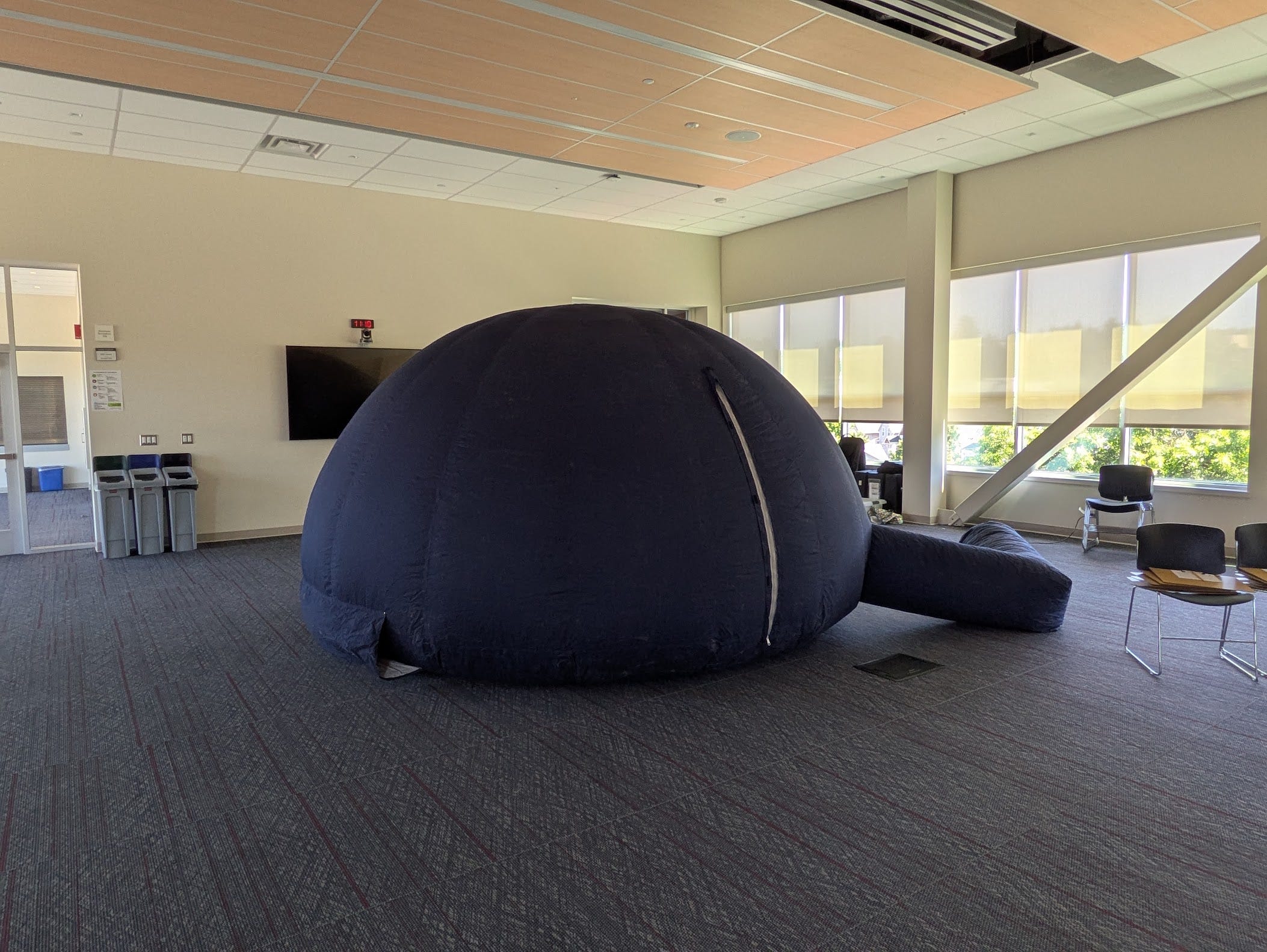
Students exiting the show reflected:
“The moon moves really fast!”
“I wonder what would happen if you landed on Jupiter?”
“I learned that there are 88 official constellations, and the Big Dipper isn’t one of them”
“The coolest thing that I learned today was that many planetary scientists disagree about whether or not Pluto is a planet”
And much more!
Introduction to Stargazing: Technical Parameters
Time: 30-60 minutes
Recommended Grade Level: 2nd and up
Space Requirements: Dome requires a quiet, indoor room with a minimum 22-by-22-foot area of clean, open floor space and a 12-foot-high ceiling.
Capacity: 15 adults, or 20 small children
Price: $200 for the first hour of programming, and $100 for each additional hour. Discounts available for nonprofits.
Next week I’m looking forward to visiting another local middle school to re-launch a version of a show I wrote a long time ago, called “Summer Sky Stories.” This will feature about an hour of planetarium content with a focus on mythology, cultural astronomy, and storytelling. For extra fun, we take advantage of the light from our projector and add in some shadow puppets to help enact some classic sky myths. After this, students will get into groups, create their own explainer myth and shadow puppets, then tell the story to their peers. I’m excited to report back next month on that!
Sky Updates
Here are a few more items to look for in the sky this month:
May 31: “Blue Moon” - We’ve talked about this before, but one of the folk definitions of a Blue Moon is having two full moons occurring in the same calendar month. This will be the second full moon in May this year. The blog where we talked about other blue moon definitions is here.
June 9: Jupiter and Venus Conjunction - Venus and Jupiter are both prominent in the evening sky this month, and they will creep closer and closer together, appearing to come together on this date.
June 10 - Moon and Saturn Conjunction - Spy the moon and Saturn close together in the morning sky. This is technically the morning of the same evening as the previous event!
June 15 - Mercury at greatest Eastern Elongation - Look close to the horizon in the evening as you’re looking for Venus and Jupiter, and you’ll see Mercury nearby, as close as it will get to Jupiter before heading back towards the sun. (The moon is also nicely aligned with all 3 planets this evening in waxing crescent form, but it may be very difficult to see until the next day.)
June 21 - Summer Solstice - Celebrate the longest day of the year! I know I will be. Here’s a link to last year’s blog about the summer solstice and the Egyptians.
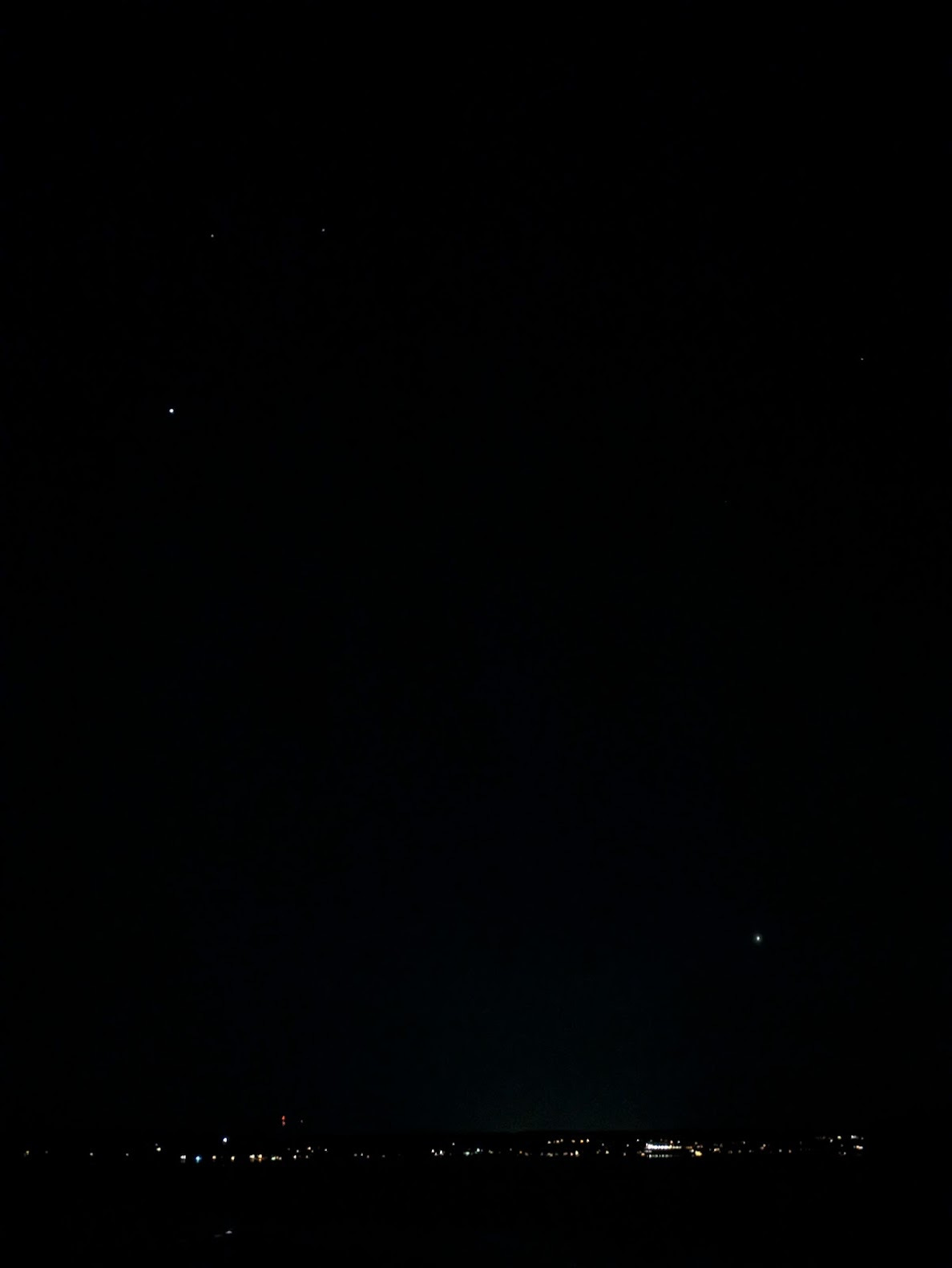
Castor and Pollux in the upper left, with bright Jupiter nestled underneath. Venus in the lower right corner. Lights of a distant shore along the bottom. Taken from the ferry dock on May 7, 2026.
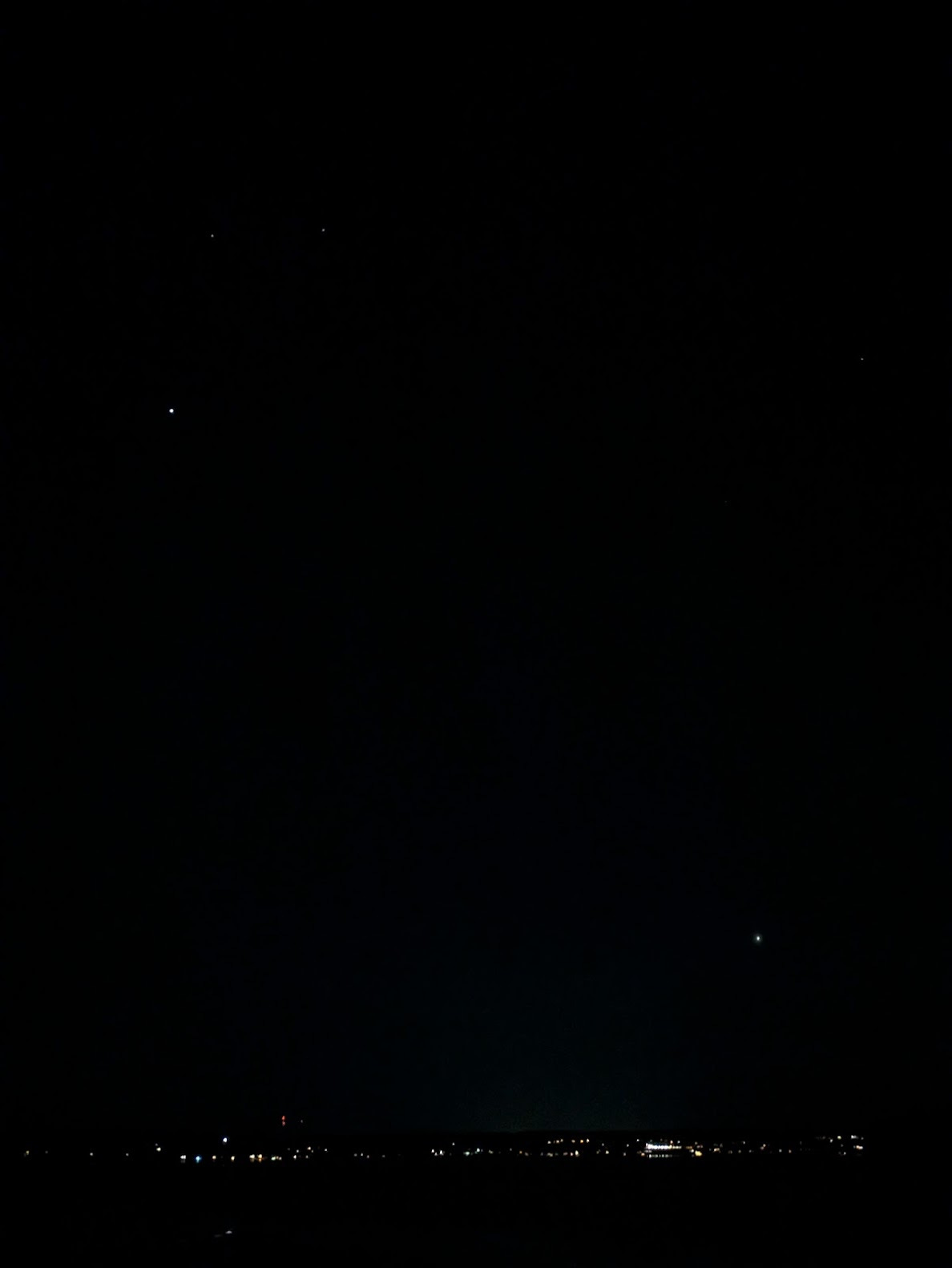
The next few months are absolutely stacked with gigs (mostly theatre, but some planetarium), so I’ll be taking a little bit of a step back from writing long blog posts for the next little bit to focus on music directing, choreography, and curriculum planning. But I’ll be back to sharing longer posts in the Fall.
In the meantime, reach out if you want to book planetarium shows for the Fall, and stay tuned for updates about Know the Night!
I'd love to see an inside shot of that dome with the planetarium in action! It sure sounds cool.